
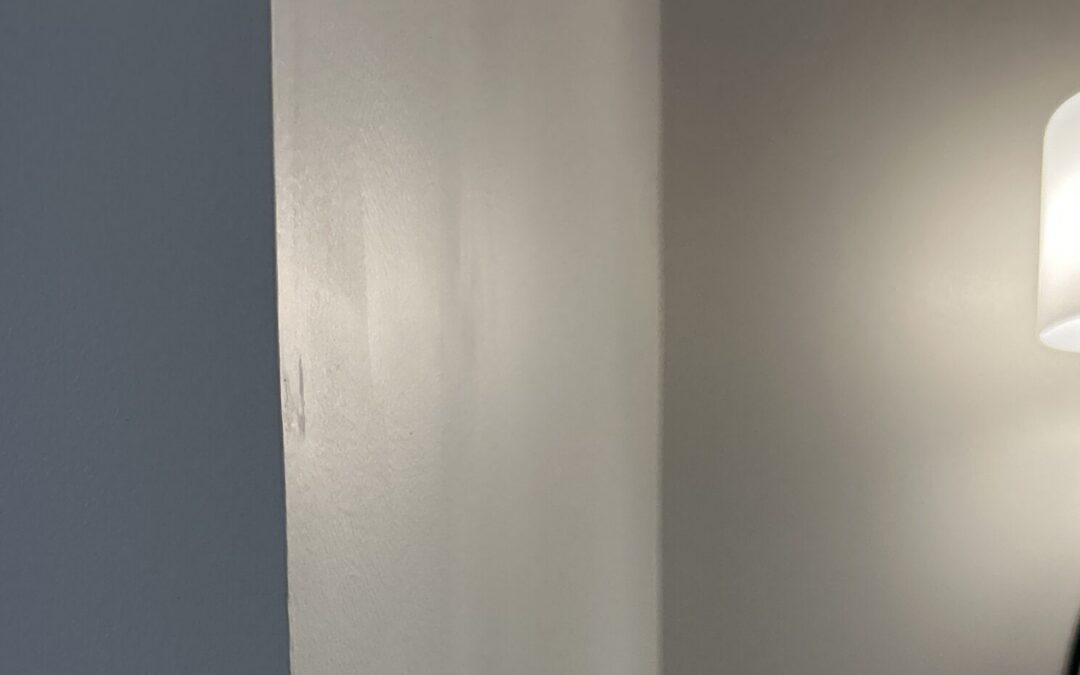
You repair a hole, repaint the wall, and expect the patch to disappear. Instead, you can still see it every time sunlight hits the wall.
A visible drywall patch usually comes down to one or more things: the repair isn’t completely level, the texture doesn’t match, the surface wasn’t properly primed, or the new paint is reflecting light differently than the surrounding wall. Adding another coat of paint won’t necessarily fix it. The key is identifying what’s actually making the repair stand out.
Why Does a Drywall Patch Show Through Paint?
Paint follows the surface beneath it. It can change the color and sheen of a wall, but it cannot hide an uneven repair, poorly feathered compound, sanding marks, or mismatched texture. A quality drywall repair has to blend into the surrounding wall before primer and paint are applied.
A repair involves more than filling a hole. The patched area needs to transition into the existing wall so the finished surface looks consistent from different viewing angles and under the room’s lighting.
For example, a small patch may appear acceptable while the wall is being repaired. Once paint dries, differences in surface texture or sheen can become easier to notice. This does not necessarily mean the entire wall needs to be replaced. The appropriate next step depends on the condition of the repair and the surrounding finish.
Common Reasons a Drywall Repair Is Still Visible
Several conditions can make a drywall patch stand out after painting. More than one may be contributing to the same problem.
The Patch Is Not Level With the Surrounding Wall
If joint compound sits too high, the repair may create a raised area or noticeable edge. If the repaired section is too low, it can appear as a shallow depression.
Paint may make the difference more noticeable, but it does not level the wall. If the patch is raised or recessed, the surface needs to be corrected before another coat of paint will improve the appearance.
The Joint Compound Was Not Feathered Far Enough
Feathering means gradually spreading joint compound beyond the repaired area so the transition into the existing wall is less noticeable.
If the compound ends abruptly, the edge may show through the paint. A patch can be filled but still have a visible outline if the surrounding transition is too sharp.
The goal is not simply to cover the damaged spot. It is to create a gradual transition that works with the rest of the wall.
Sanding Left Ridges, Scratches, or Uneven Areas
Drywall compound can leave visible imperfections if the finished surface has ridges, rough spots, or uneven transitions. These may become more apparent after painting, especially when light falls across the wall at an angle.
A wall can look smooth when viewed straight on but reveal imperfections from the side. This is one reason the finished surface matters as much as the repair itself.
The Texture Does Not Match
A repaired area may have a different texture from the original wall. One section might look smoother, rougher, or more pronounced than the surrounding surface.
Even when the patch is level, the texture difference can create a visible outline. This is particularly noticeable when the original wall has a distinctive finish that is difficult to reproduce consistently.
The Repair Was Not Properly Primed
Joint compound and existing painted drywall can absorb paint differently. Primer helps prepare the repaired surface for a more consistent finish.
If primer is skipped or applied inconsistently, the repaired area may absorb paint differently from the surrounding wall. The result can be a noticeable variation in appearance even when the color is similar.
Primer may help with certain surface-preparation issues, but it cannot correct a raised patch, depression, or mismatched texture.
Paint Sheen or Surface Porosity Is Different
Paint sheen describes how much light a painted surface reflects. Differences in sheen can make one area appear more noticeable than another.
Surface porosity also matters. A repaired section may absorb paint differently from the surrounding wall, which can affect the finished appearance. This variation is sometimes described as flashing.
A patch that appears to be a color problem may actually involve how the surface reflects light or absorbs the paint.
Lighting Is Revealing the Repair
Sunlight coming through a window or a light fixture positioned near the wall can make small surface variations easier to see. Light moving across a wall at an angle can emphasize ridges, depressions, and texture differences.
If the patch looks more obvious at certain times of day, lighting may be revealing an existing surface irregularity rather than causing the repair to fail.
Only the Repaired Area Was Painted
Painting only the patched section can leave a visible difference between the new paint and the existing wall. Even when the color appears to match in the can, differences in age, sheen, or the condition of the existing finish may affect the result.
Depending on the wall and paint, blending or repainting a larger area may be considered. However, repainting more surface area will not correct an underlying drywall-finishing problem.
Can Another Coat of Paint Hide a Drywall Patch?
Sometimes, but not always. The right approach depends on whether the problem is mainly related to paint or to the surface beneath it.
Paint or finish issue: If the issue is inconsistent coverage or sheen, primer or another coat of paint may help. If the patch is raised, recessed, poorly feathered, or has mismatched texture, more paint will not correct it. The drywall finish needs to be addressed first.
Texture mismatch: The patch has a different pattern or surface appearance. The texture may need to be matched to the surrounding wall.
Drywall-finishing issue: The patch has raised edges, depressions, ridges, or visible seams. Additional drywall finishing may be needed before repainting.
If the surface is properly finished but the paint appearance is inconsistent, repainting may help. If the patch is uneven or the texture differs, applying more paint may simply leave the same problem visible.
The important distinction is whether the paint is revealing the problem or the paint itself is part of the problem. When the cause is unclear, assessing the surface before repeating the same fix can help avoid unnecessary work.
Why Texture Matching Matters
Texture matching is an important part of making a drywall repair blend with an existing wall. The original surface may have a subtle pattern that is easy to overlook until a smooth patch is placed beside it.
Matching texture is not always as simple as applying the same material. The appearance of an existing finish can depend on its pattern, depth, age, and condition. Previous repairs or layers of paint may also affect how the wall looks.
A professional assessment considers the repaired area in relation to the surrounding surface. Texture matching is an important part of drywall repair, especially in homes with existing orange peel, knockdown, or other textured finishes. JB Custom can evaluate the existing texture and determine the best approach for blending the repaired area into the surrounding wall.
Learn more about JB Custom Drywall’s texture services.
The goal is to determine what the wall needs so the repair and surrounding finish work together as consistently as conditions allow.
When Does a Drywall Patch Need to Be Repaired Again?
A visible patch does not automatically mean the drywall needs to be replaced. However, recurring damage or an uneven finish may indicate that additional repair is needed.
Look for:
- Raised edges or noticeable depressions
- Visible seams or outlines
- Bubbling or loose tape
- Cracking or damage that returns
- A patch that remains obvious after painting
If the patch continues to stand out or shows signs of recurring damage, a closer assessment can help determine whether additional finishing or a more extensive repair is needed.
For more context, read Drywall Repair vs. Replacement: How to Know What Your Milwaukee-Area Home Needs.
What Should a Professional Drywall Repair Include?
A professional drywall repair should address more than the damaged spot itself. Depending on the repair, that can include securing or replacing damaged drywall, properly taping and applying joint compound, feathering the repair into the surrounding surface, sanding to a consistent finish, matching the existing texture, and preparing the surface for primer and paint.
The goal is for the repair to work with the surrounding wall, not simply cover the damage.
JB Custom Drywall provides drywall repair and finishing services for homeowners across Southeastern Wisconsin. Explore our drywall repair services to learn more about addressing damaged walls and visible patches.
FAQs About Visible Drywall Patches
Why can I see drywall mud through paint?
Joint compound may absorb paint differently from the surrounding wall, or the repaired area may have a different surface level or texture. Primer and appropriate surface preparation can help with some finish differences, but they will not correct an uneven patch.
Will primer hide a drywall patch?
Primer can help prepare repaired drywall for paint and reduce differences in how surfaces absorb it. However, primer does not level a raised area, fill a depression, or match a different wall texture.
Why does my drywall patch show more when sunlight hits it?
Sunlight or other angled lighting can emphasize small ridges, depressions, seams, and texture variations. The light may reveal a surface difference that is less noticeable under other conditions.
Can an old drywall patch be redone?
An old patch may be able to receive additional repair or finishing if the condition of the drywall allows it. The appropriate work depends on what is causing the patch to remain visible and whether there is recurring damage or another underlying issue.
Still Seeing the Patch? Let’s Figure Out Why.
If an old drywall repair is still catching your eye, adding another coat of paint may not be the answer. JB Custom can evaluate the repair, texture, and surrounding finish to determine what is making the patch stand out and what it will take to correct it.
JB Custom Drywall helps homeowners in Milwaukee, Waukesha, and surrounding Southeastern Wisconsin communities with drywall repair and finishing needs. The team emphasizes craftsmanship, clear communication, and respect for your home.
Request a Free Estimate or call 262-617-0637.
Changing Perceptions. Exceeding Expectations.
Recent Comments